Universal Acceptance: Why Africa Should Be Concerned About the Future of the Internet

Africa is experiencing one of the fastest digital transformations in the world. From mobile banking in Kenya and Ghana to e-commerce growth in Nigeria and South Africa, the continent is increasingly connected, innovative, and digitally driven. Yet beneath the surface of this progress lies a fundamental challenge that many policymakers, businesses, developers, and internet users have never heard of: Universal Acceptance (UA).
Universal Acceptance is often described as the next necessary step in making the internet truly inclusive. While it may sound technical, its implications are profound. Without Universal Acceptance, millions of Africans may find themselves excluded from full participation in the digital economy simply because their names, languages, email addresses, or domain names are not recognized by websites, applications, and online services.
As Africa seeks to build a digital future that is inclusive, multilingual, and locally relevant, Universal Acceptance should become a strategic priority.
What is Universal Acceptance?
Universal Acceptance is the principle that all valid domain names and email addresses should work equally across all internet-enabled systems, applications, and devices.
This means that:
- Every valid domain name should be accepted, stored, processed, validated, and displayed correctly.
- Every valid email address should function properly regardless of the language, script, or length used.
- New domain extensions should be treated the same way as older, familiar extensions like .com, .org, or .net.
In practical terms, Universal Acceptance ensures that internet users are not disadvantaged because they use a newer domain name or a local language script.
For example, many websites still assume that valid email addresses end in .com, .org, or a country’s traditional domain. If a user registers an email address using a newer domain extension, some systems may incorrectly reject it during sign-up.
This creates barriers that should not exist on a modern, global internet.
Why Universal Acceptance Matters
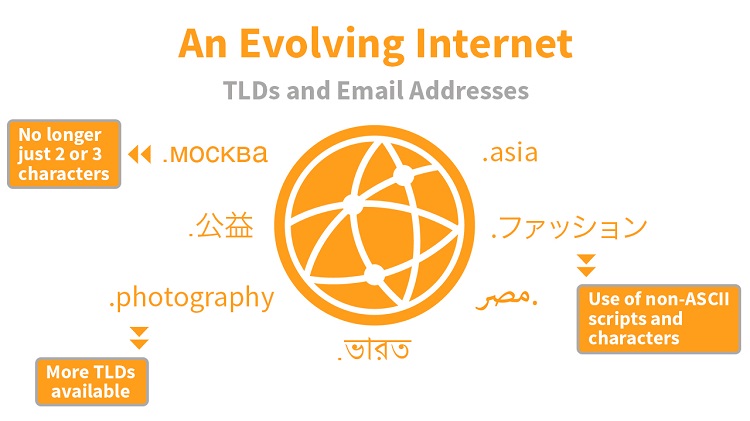
The internet was originally designed around a relatively small set of domain names and languages. Over time, however, the internet has evolved dramatically.
Today there are:
- Thousands of top-level domains (TLDs)
- Domain names in multiple languages and scripts
- Internationalized email addresses
- Growing demand for localized digital identities
Universal Acceptance ensures that internet infrastructure evolves alongside these changes.
Without UA, innovation becomes restricted because systems continue to operate based on outdated assumptions about what constitutes a valid online identity.
The African Context
For Africa, Universal Acceptance is more than a technical issue; it is a development issue.
The continent is home to:
- More than 1.4 billion people
- Thousands of languages
- Rapidly growing internet penetration
- Expanding digital economies
- Increasing adoption of local digital services
Despite this growth, much of Africa’s digital experience remains dependent on technologies and standards developed elsewhere.
Universal Acceptance provides an opportunity to build a more locally relevant internet that reflects African identities, cultures, and languages.
The Language Inclusion Challenge
One of Africa’s greatest assets is its linguistic diversity.
The continent has over 2,000 languages, representing nearly one-third of the world’s languages. Yet many African internet users still navigate a digital environment dominated by a handful of global languages.
Universal Acceptance supports the broader vision of a multilingual internet by enabling:
- Local-language domain names
- Native-script email addresses
- Greater accessibility for non-English speakers
- Improved digital inclusion
As governments and communities work to preserve indigenous languages in the digital age, UA becomes an important enabler.
An internet that cannot properly process diverse linguistic identities is an internet that excludes people.
Also Check
Supporting Local Digital Identities
For decades, many African businesses have relied on generic domain extensions such as .com.
However, there is growing interest in local and regional digital identities through country-code domains and newer domain extensions.
When businesses use domain names that reflect their communities, cultures, industries, or regions, they create stronger local digital brands.
Yet if websites, software platforms, or online forms reject these domains because they do not fit outdated validation rules, adoption becomes difficult.
Universal Acceptance removes these barriers and ensures that local digital identities receive equal treatment online.
Economic Implications for African Businesses
The African digital economy is projected to contribute hundreds of billions of dollars to the continent’s GDP over the coming decades.
For startups, SMEs, and entrepreneurs, online presence is increasingly critical.
Consider the following scenario:
A Ghanaian startup launches with a modern domain name and creates professional email addresses using that domain. Potential customers attempt to register on a platform or submit inquiries, only to discover that the system rejects their email addresses because it fails to recognize the domain extension.
The result?
- Lost business opportunities
- Reduced customer trust
- Increased operational costs
- Lower competitiveness
Universal Acceptance helps create a level playing field where businesses can choose domain names based on strategic value rather than technical limitations.
Digital Inclusion and the Next Billion Users
Many of the world’s next billion internet users are expected to come from Africa.
As connectivity expands into rural communities and underserved populations, the internet must become more inclusive.
Digital inclusion is not only about access to devices and connectivity. It is also about ensuring that people can participate using identities that reflect who they are.
Universal Acceptance supports this vision by allowing users to:
- Register online services without unnecessary barriers
- Use localized email addresses
- Access services in their preferred languages
- Participate fully in digital economies
Without UA, digital transformation risks becoming exclusionary rather than inclusive.
Why Developers and Technology Companies Should Care
A significant portion of Universal Acceptance challenges originate from software design choices.
Developers often create validation rules based on outdated assumptions, such as:
- Limiting domain lengths
- Restricting accepted domain extensions
- Rejecting internationalized email addresses
- Hardcoding specific domain formats
These practices unintentionally exclude legitimate users.
African technology companies have a unique opportunity to avoid repeating these mistakes.
By adopting UA-ready development practices from the beginning, African startups can build more inclusive and globally compatible platforms.
This not only benefits local users but also positions African technology products for international growth.
The Role of Governments and Policymakers
Governments across Africa are investing heavily in digital transformation strategies.
Many national plans focus on:
- Digital identity systems
- E-government services
- Digital literacy
- Local innovation ecosystems
Universal Acceptance should be incorporated into these initiatives.
Governments can:
- Include UA requirements in procurement standards
- Promote awareness among public institutions
- Encourage local software developers to adopt UA practices
- Support capacity-building and training programs
When public-sector platforms fail to recognize valid digital identities, citizens face unnecessary barriers to essential services.
Education and Awareness Remain Low
One of the biggest obstacles to Universal Acceptance adoption is a lack of awareness. Many decision-makers simply do not know the issue exists. Developers may never have tested their applications against newer domain names. Business leaders may not realize why some customers experience registration failures. Government agencies may overlook UA when designing digital services. Increasing awareness is therefore critical.
Universities, technical communities, internet governance organisations, and industry associations all play important roles in educating stakeholders about UA readiness.
Africa’s Opportunity to Lead
Unlike many mature digital markets that must retrofit legacy systems, Africa has an opportunity to build with Universal Acceptance in mind from the start.
As new digital services emerge across sectors such as:
- Fintech
- E-commerce
- Education technology
- Healthcare technology
- Government services
UA can be integrated as a foundational requirement rather than an afterthought. This approach aligns with broader goals around digital sovereignty, inclusion, innovation, and economic growth.
Universal Acceptance may appear to be a technical concern, but its impact reaches far beyond technology. It affects digital inclusion, economic opportunity, language preservation, innovation, and the ability of individuals and businesses to participate fully in the internet economy. For Africa, the stakes are particularly high. As the continent continues its rapid digital transformation, ensuring that all valid digital identities are accepted and recognized is essential to building an internet that works for everyone.
The question is not whether Universal Acceptance matters. The question is whether Africa can afford to ignore it. The future of Africa’s digital economy depends on an internet that is open, inclusive, and accessible to all. Universal Acceptance is a critical step toward achieving that vision.